Concept
The film begins with a simple observation: a lot of work still happens the slow way: manually, step by step, task by task. Emails are written one line at a time, information is passed around, and progress depends on how fast a person can move.
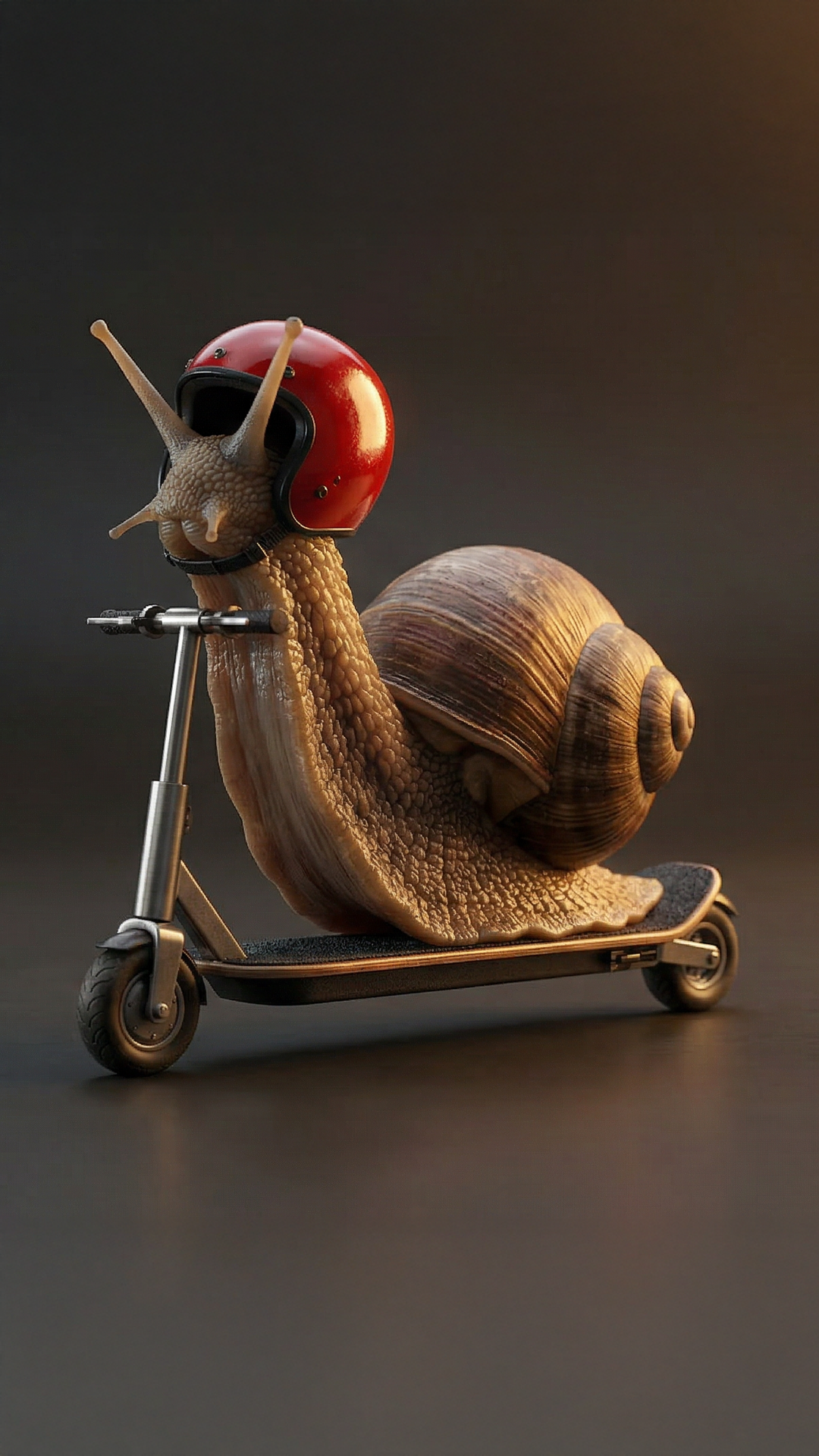
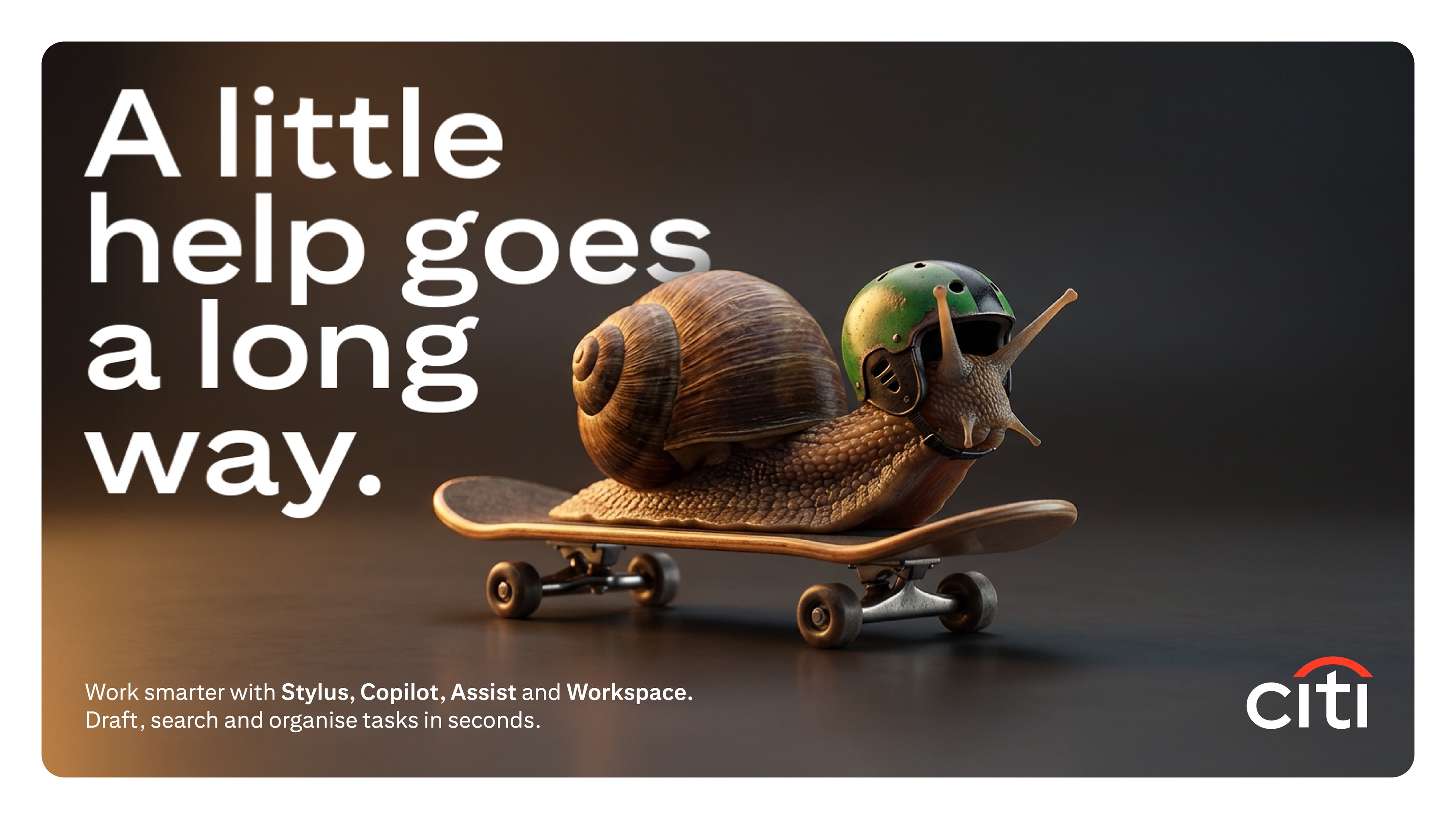
To bring this to life, we use a snail, something universally understood to be slow; placed in a modern, AI-enabled workspace. At first, it struggles through the work in the same way many of us do: pushing paperwork, moving things along bit by bit, taking time to get anywhere. Then something changes. The environment becomes smarter. Tasks begin to complete themselves. Systems connect. And the snail, instead of working harder, simply moves within this new system, faster, smoother, almost effortlessly.
By the end, the message is clear without ever being stated outright:
when the system works, you don’t have to.
when the system works, you don’t have to.
Execution
The film was created entirely using AI-native tools, with a focus on maintaining a consistent, premium visual language across every scene.
Runway (Gen-4.5 / Nano Banana 2 / Animate Keyframes)
Used to generate all visuals and motion sequences. Scenes were built as modular clips using detailed prompts, then refined through keyframe-based animation to control timing, pacing, and transitions. Particular attention was paid to keeping motion grounded; avoiding exaggerated physics so the humor remained believable.
Used to generate all visuals and motion sequences. Scenes were built as modular clips using detailed prompts, then refined through keyframe-based animation to control timing, pacing, and transitions. Particular attention was paid to keeping motion grounded; avoiding exaggerated physics so the humor remained believable.
Prompt Engineering System
A structured prompting approach was used to ensure continuity across shots, locking in variables like camera angle (low-angle macro), lighting (warm, directional, high-contrast), and environment (minimal desk, silver laptop). Each scene evolved from a shared “master prompt” to maintain consistency in tone, texture, and composition.
A structured prompting approach was used to ensure continuity across shots, locking in variables like camera angle (low-angle macro), lighting (warm, directional, high-contrast), and environment (minimal desk, silver laptop). Each scene evolved from a shared “master prompt” to maintain consistency in tone, texture, and composition.
Visual Direction
The aesthetic draws from Apple-style product films - minimal, precise, and quietly confident. This meant:
The aesthetic draws from Apple-style product films - minimal, precise, and quietly confident. This meant:
• Controlled camera movement (subtle push-ins, lateral tracking)
• Clean compositions with a single focal point
• High-end material rendering (glass, aluminum, paper textures)
• Warm, cinematic lighting to elevate even humorous moments
Scene Design & Sequencing
The narrative was broken into short, modular scenes (manual effort → overload → activation → effortless flow → resolution). Each was designed to stand alone or be combined into a longer cut, allowing flexibility across formats (short loops, internal screens, full film).
The narrative was broken into short, modular scenes (manual effort → overload → activation → effortless flow → resolution). Each was designed to stand alone or be combined into a longer cut, allowing flexibility across formats (short loops, internal screens, full film).
Iteration Process
Multiple prompt variations were tested to refine:
Multiple prompt variations were tested to refine:
Motion realism (e.g., snail speed, object interaction)
Timing of AI moments (auto-typing, task completion)
Balance between humor and polish
A distinctive internal campaign that uses humor, craft, and simplicity to drive AI adoption, showing that when the system works, everything moves.